Muscles / Lower legs
Tibialis posterior
- Lower legs
- Leg & ankle
- Deep layer
Also called posterior tibialis, tib post.
Anatomy
- Origin
- Interosseous membrane and adjacent posterior tibia and fibula
- Insertion
- Tuberosity of the navicular; cuneiforms, cuboid and bases of metatarsals 2-4
- Nerve
- Tibial nerve (L4-L5)
Actions
- Inverts the foot
- Plantarflexes the ankle
- Supports the medial longitudinal arch
Exercises that train it most
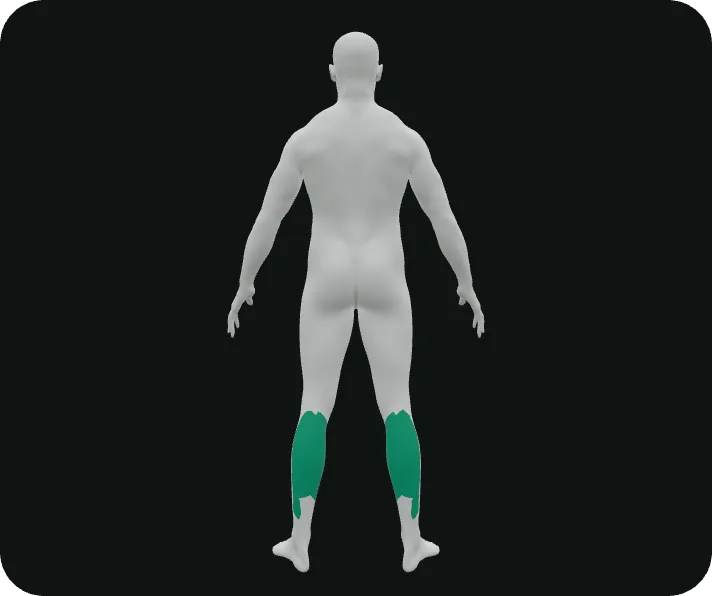
Also trained by
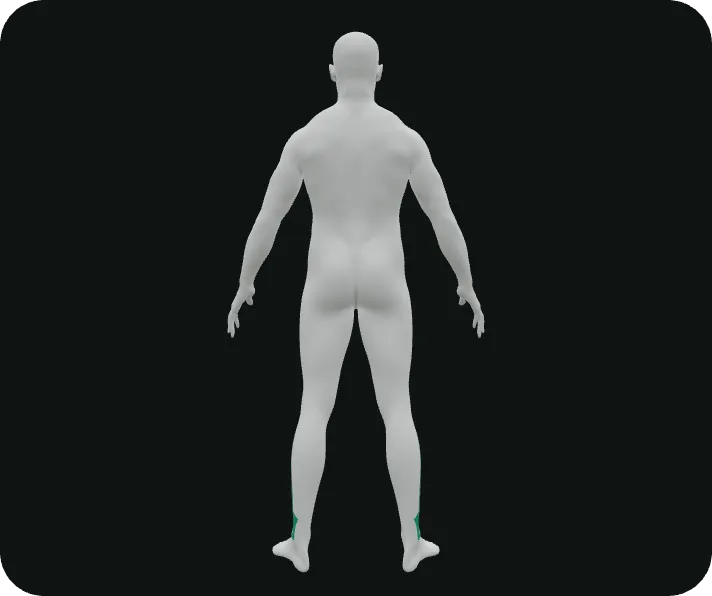
Notes
- Tendon dysfunction leads to progressive collapsing flatfoot (adult-acquired flatfoot).
- Closed-chain resisted foot adduction activates it more selectively than heel raises or open-chain supination.
References (6)
- Kulig K, Burnfield JM, Requejo SM, Sperry M, Terk M. Med Sci Sports Exerc. 2004;36(5):862-867. Selective activation of tibialis posterior: evaluation by magnetic resonance imaging
- Kulig K, Reischl SF, Pomrantz AB, et al. Phys Ther. 2009;89(1):26-37. Nonsurgical management of posterior tibial tendon dysfunction with orthoses and resistive exercise: a randomized controlled trial
- Standring S, ed. Elsevier. Gray's Anatomy: The Anatomical Basis of Clinical Practice. 42nd ed.
- Dalley AF, Agur AMR. Wolters Kluwer. Moore's Clinically Oriented Anatomy. 9th ed.
- Neumann DA. Elsevier. Kinesiology of the Musculoskeletal System: Foundations for Rehabilitation. 3rd ed.
- Betts JG, Young KA, Wise JA, et al. OpenStax (free, openly licensed textbook). Anatomy and Physiology 2e