Exercises / Abdomen
Bear hover
- Motor control
- Abdomen
- Mat
Brace gently and lift the knees a few centimetres while maintaining a steady trunk and normal breathing.
Also called bear plank, quadruped knee hover, beast hold, tabletop hover.
Where you stand
No published distribution for this exercise yet. We add one only from a peer-reviewed study.
Muscles worked
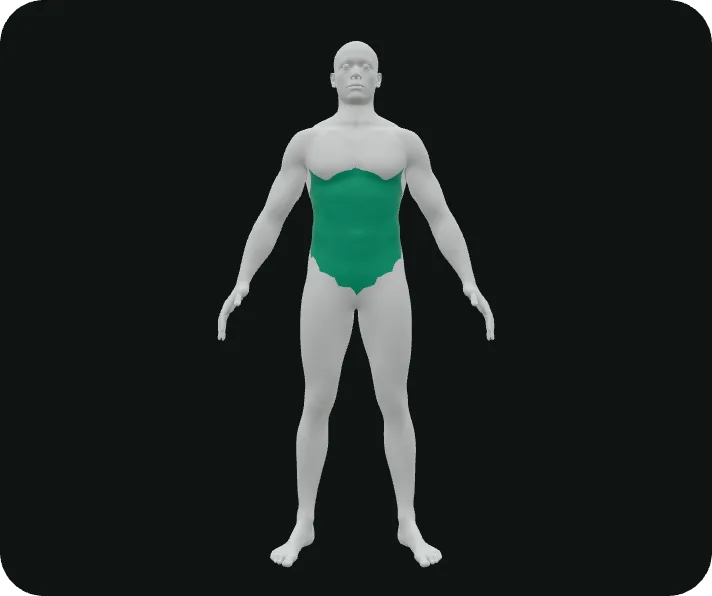
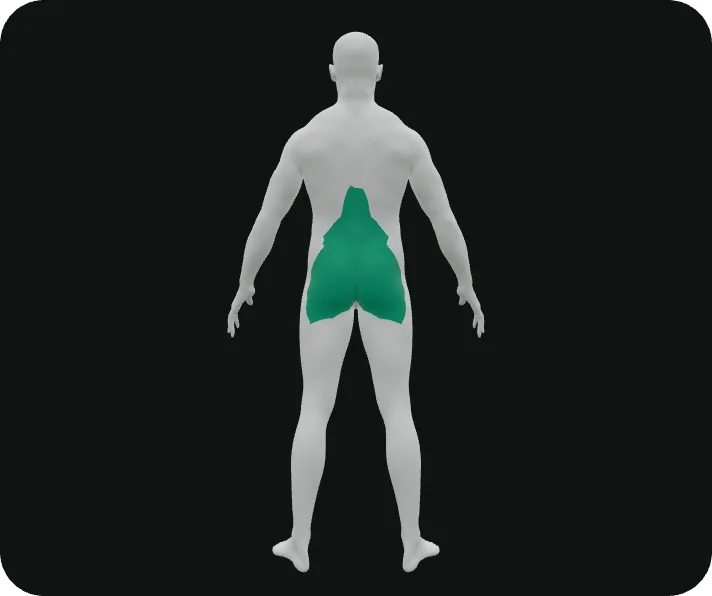
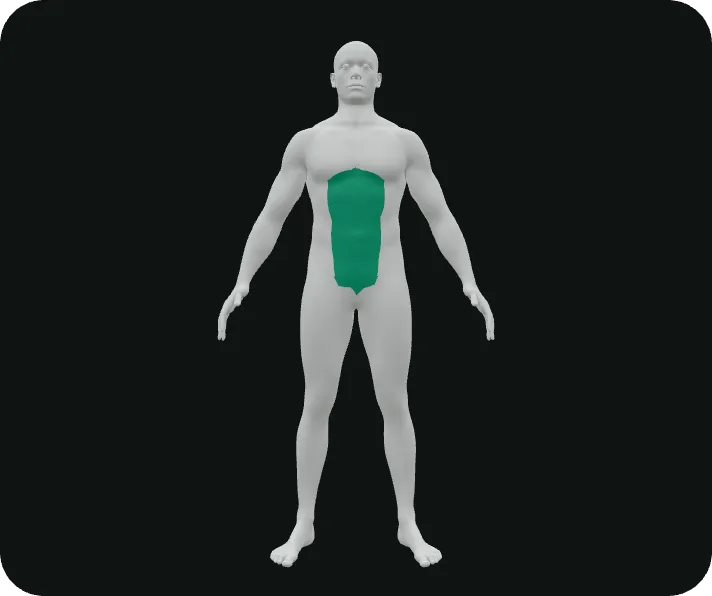
Filled: primary. Outlined: secondary.
How much
Example starting dose: 3-5 holds of 5-10 seconds with rest between holds. End the hold when trunk control or normal breathing is lost.
Start: On hands and toes with knees just above the floor
Steps
- Start on hands and knees, hands under shoulders and knees under hips. Tuck the toes under.
- Breathe out, gently brace the abdomen and lift both knees just clear of the floor.
- Keep the back steady and breathe normally for a short hold, then lower the knees with control.
Cues
- Hover low
- Push the floor away
- Keep breathing throughout the hold
Common mistakes
- Lifting the hips into a pike
- Letting the low back sag
- Holding the breath
- Shrugging into the ears
Used for
- Progression of trunk control in quadruped
- Practice of coordinated shoulder, trunk and leg support
Take care (3)
- Keep knees down if wrist, shoulder or toe loading is painful.
- Avoid straining or breath holding; shorten the hold as needed.
- Use only within any current postoperative loading restrictions.
Evidence (1)
- A Cochrane review found that motor-control exercise programmes can help chronic nonspecific low-back pain compared with minimal intervention, with similar outcomes to other exercise. It did not isolate bear hover or establish an optimal dose for this pose.1
Easier
Harder
References (1)
- Saragiotto BT, Maher CG, Yamato TP, et al. Cochrane Database Syst Rev. 2016;(1):CD012004. Motor control exercise for chronic non-specific low-back pain