Exercises / Hip & gluteal
Side-lying hip abduction
- Strength
- Hip & gluteal
- Mat, Ankle weight (optional)
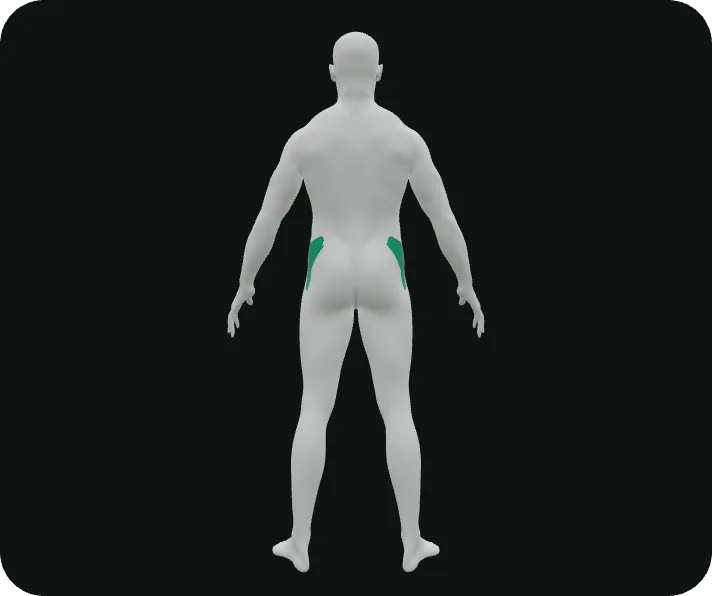
Top leg lifted toward the ceiling with the hip slightly extended. The highest gluteus medius EMG among 12 common exercises in Distefano et al.
Also called side lying leg raise, SLHA, hip abduction.
Where you stand
No published distribution for this exercise yet. We add one only from a peer-reviewed study.
Muscles worked
Filled: primary. Outlined: secondary.
How much
Typical strength dose: 2-3 sets of 8-12 repetitions at a load that is hard by the last repetition, 2-3 days per week (ACSM novice guideline). Adjust to symptoms.
Start: Side-lying, bottom knee bent
Steps
- Lie on the side with the bottom knee bent for stability and the pelvis stacked.
- Keep the top knee straight, the toes pointing forward and the hip slightly behind the body line.
- Lift the leg to about 30-40°, then lower slowly.
Cues
- Lead with the heel
- Do not let the pelvis roll back
Common mistakes
- Hip flexing forward (TFL takes over)
- Rolling the pelvis backward
- Hiking with the trunk
Used for
- Hip abductor weakness
- Patellofemoral pain
- Hip osteoarthritis
- Iliotibial band pain
Take care (1)
- In gluteal tendinopathy, avoid end-range adduction positions that compress the tendon; start with isometrics.
Evidence (2)
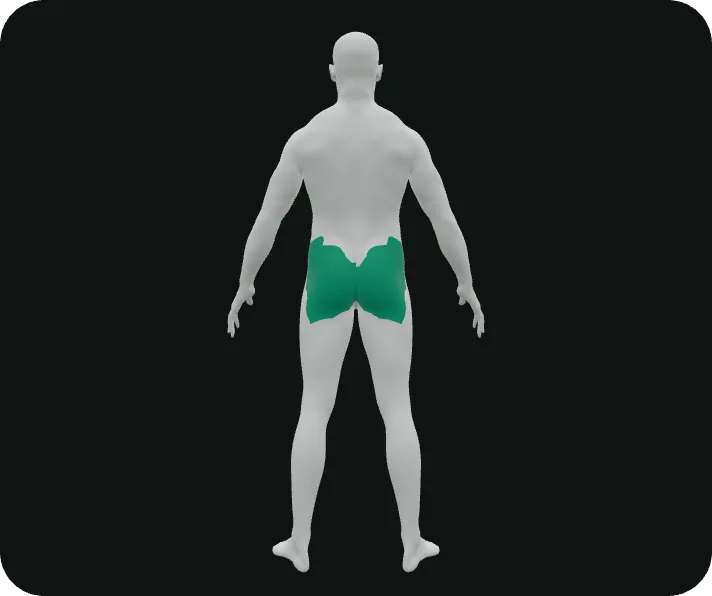
Easier
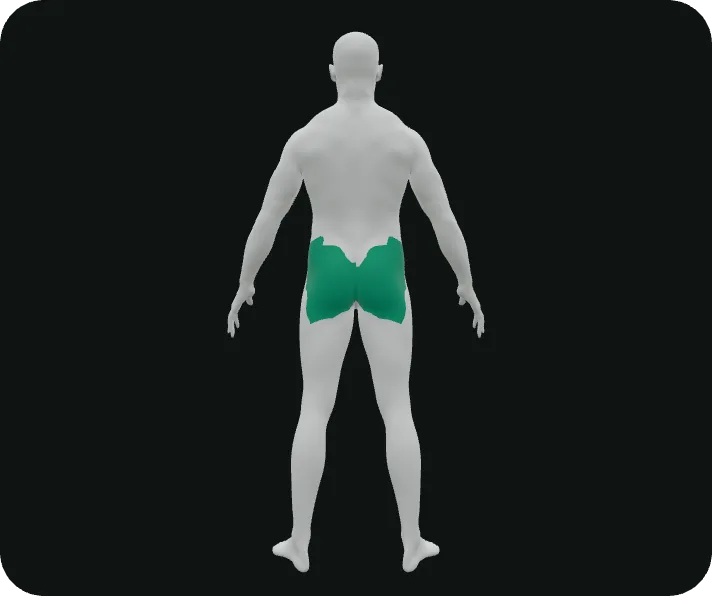
Harder
References (4)
- Distefano LJ, Blackburn JT, Marshall SW, Padua DA. J Orthop Sports Phys Ther. 2009;39(7):532-540. Gluteal muscle activation during common therapeutic exercises
- Neumann DA. Elsevier. Kinesiology of the Musculoskeletal System: Foundations for Rehabilitation. 3rd ed.
- Selkowitz DM, Beneck GJ, Powers CM. J Orthop Sports Phys Ther. 2013;43(2):54-64. Which exercises target the gluteal muscles while minimizing activation of the tensor fascia lata? Electromyographic assessment using fine-wire electrodes
- Reiman MP, Bolgla LA, Loudon JK. Physiother Theory Pract. 2012;28(4):257-268. A literature review of studies evaluating gluteus maximus and gluteus medius activation during rehabilitation exercises