Exercises / Abdomen
Standing side bend with a dumbbell
- Strength
- Abdomen
- Dumbbell
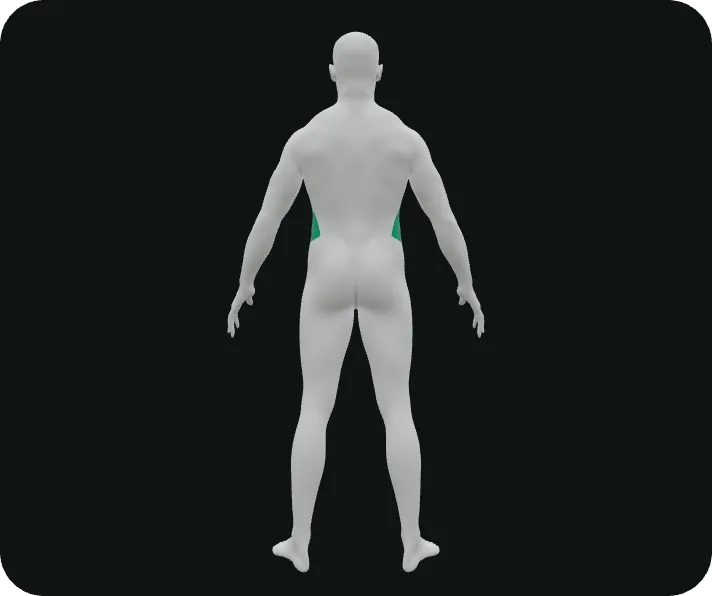
Bending sideways with a weight in one hand and returning upright works quadratus lumborum and the obliques on the side opposite the weight.
Also called dumbbell side bend, lateral trunk flexion.
Where you stand
No published distribution for this exercise yet. We add one only from a peer-reviewed study.
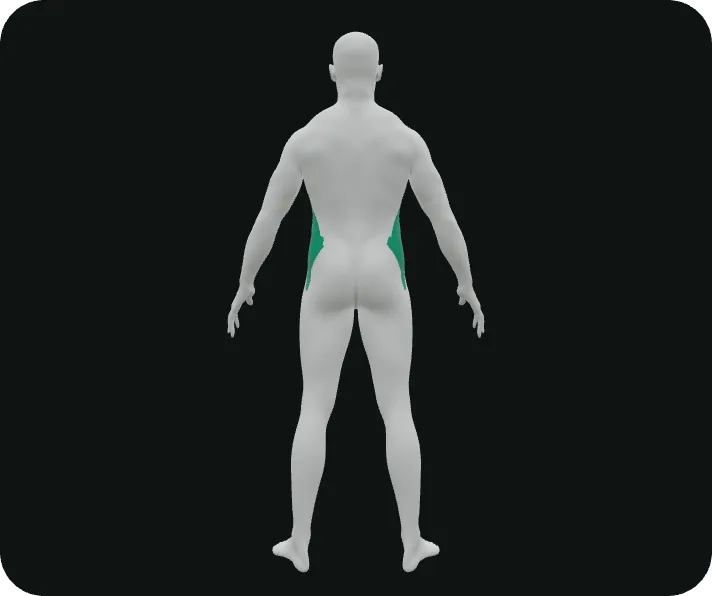
Muscles worked
Filled: primary. Outlined: secondary.
How much
Common clinical dose: 2-3 sets of 8-12 repetitions at a load that is hard by the last repetition, 2-3 days per week (ACSM novice guideline). Adjust to symptoms.
Start: Standing, weight in one hand
Steps
- Stand tall with a dumbbell in one hand, arm by the side.
- Bend sideways toward the weight, sliding the hand down the thigh without leaning forward or back.
- Return upright using the muscles on the other side. Repeat, then switch hands.
Cues
- Stay in one plane, like between two panes of glass
- Move slowly
Common mistakes
- Twisting or leaning forward
- Using a heavy weight with jerky motion
Used for
- Lateral trunk strength
- Load carrying (suitcase carry) preparation
Take care (1)
- Keep the range small and the load light in acute low back pain.
Evidence (1)
- Quadratus lumborum is active across flexion, extension, lateral bending and lifting tasks, consistent with a spine-stabilising role.1
Harder
References (3)
- McGill S, Juker D, Kropf P. Clin Biomech (Bristol, Avon). 1996;11(3):170-172. Quantitative intramuscular myoelectric activity of quadratus lumborum during a wide variety of tasks
- Neumann DA. Elsevier. Kinesiology of the Musculoskeletal System: Foundations for Rehabilitation. 3rd ed.
- Dalley AF, Agur AMR. Wolters Kluwer. Moore's Clinically Oriented Anatomy. 9th ed.