Exercises / Shoulder & scapula
Prone arm raise overhead ("Y")
- Strength
- Shoulder & scapula
- Treatment table or bench
The arm is lifted overhead in line with the lower trapezius fibres. Produced the highest lower trapezius EMG in Ekstrom et al.
Also called prone Y, Y raise, lower trapezius raise.
Where you stand
No published distribution for this exercise yet. We add one only from a peer-reviewed study.
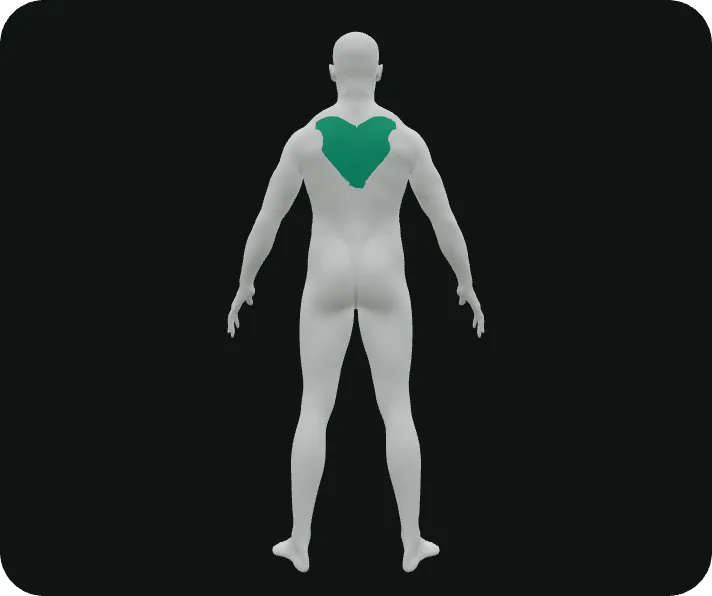
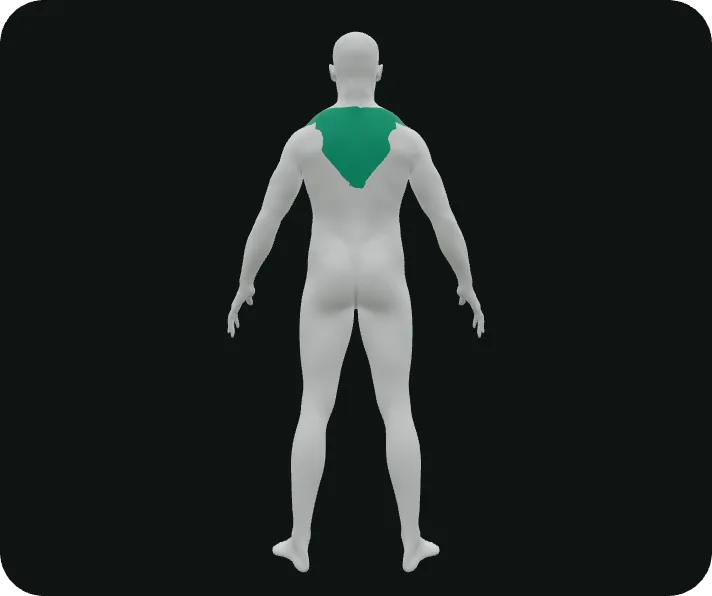
Muscles worked
Filled: primary. Outlined: secondary.
How much
Typical strength dose: 2-3 sets of 8-12 repetitions at a load that is hard by the last repetition, 2-3 days per week (ACSM novice guideline). Adjust to symptoms.
Start: Prone
Steps
- Lie face down with the arm hanging off the table.
- With the thumb up, raise the straight arm overhead at about 120-135° abduction (a "Y"), in line with the lower trapezius fibres.
- Hold 1-2 seconds, then lower.
Cues
- Lead with the shoulder blade moving down and in
- Keep the forehead on a towel
Common mistakes
- Shrugging toward the ear
- Arching the low back
Used for
- Scapular dyskinesis
- Subacromial pain
- Poor scapular upward rotation / posterior tilt
Take care (1)
- Requires near-full pain-free elevation; use side-lying forward flexion or wall slide if overhead range is limited.
Evidence (1)
- Prone overhead arm raise in line with the lower trapezius fibres produced the greatest lower trapezius EMG of 10 exercises.1
Easier
References (3)
- Ekstrom RA, Donatelli RA, Soderberg GL. J Orthop Sports Phys Ther. 2003;33(5):247-258. Surface electromyographic analysis of exercises for the trapezius and serratus anterior muscles
- Neumann DA. Elsevier. Kinesiology of the Musculoskeletal System: Foundations for Rehabilitation. 3rd ed.
- Reinold MM, Escamilla RF, Wilk KE. J Orthop Sports Phys Ther. 2009;39(2):105-117. Current concepts in the scientific and clinical rationale behind exercises for glenohumeral and scapulothoracic musculature