Exercises / Thigh & knee
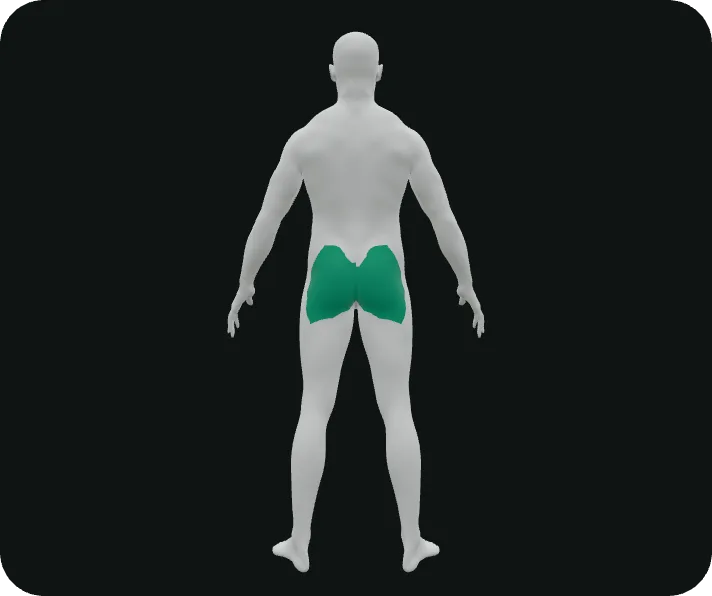
Squat
- Strength
- Thigh & knee
- None, Dumbbell or barbell (to load)
Bilateral closed-chain knee and hip extension. Low ACL-loading shear; range can be limited to protect the patellofemoral joint.
Also called bodyweight squat, goblet squat, back squat, mini squat.
Where you stand
No published distribution for this exercise yet. We add one only from a peer-reviewed study.
Muscles worked
- Quadriceps femoris
- Gluteus maximus
- Adductor magnus
- Semitendinosus
- Semimembranosus
- Biceps femoris
- Triceps surae
Filled: primary. Outlined: secondary.
How much
Typical strength dose: 2-3 sets of 8-12 repetitions at a load that is hard by the last repetition, 2-3 days per week (ACSM novice guideline). Adjust to symptoms.
Start: Standing
Steps
- Stand with feet about shoulder-width apart.
- Sit the hips back and down, knees tracking over the toes, trunk upright.
- Descend to a comfortable depth, then stand up.
Cues
- Weight through the whole foot
- Knees in line with toes
Common mistakes
- Knees collapsing inward
- Heels lifting
- Rounding the back
Used for
- ACL rehabilitation
- Knee osteoarthritis
- Patellofemoral pain (limited range)
- General lower-limb strength
Take care (1)
- For patellofemoral pain, 45°-0° knee flexion keeps patellofemoral stress lower.
Evidence (2)
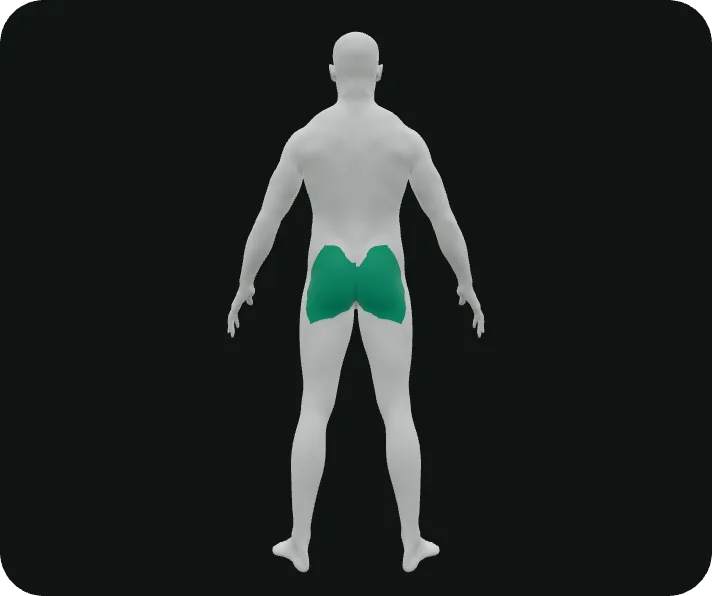
Easier
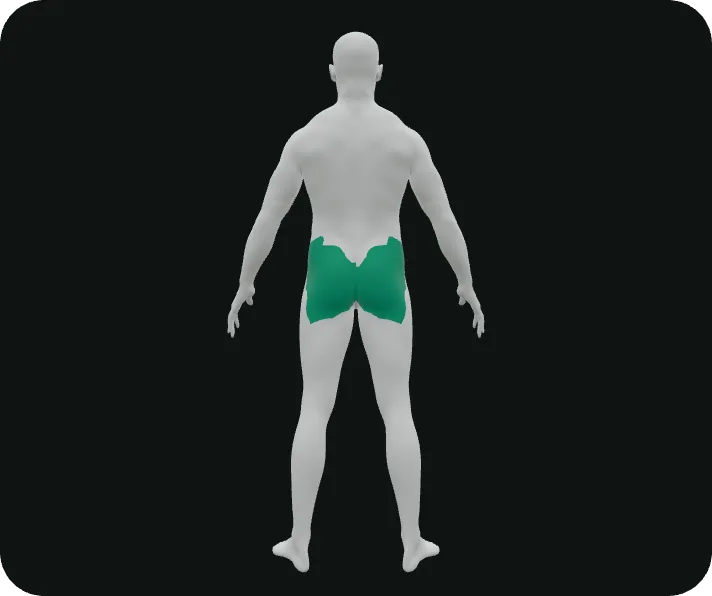
Harder
References (4)
- Escamilla RF. Med Sci Sports Exerc. 2001;33(1):127-141. Knee biomechanics of the dynamic squat exercise
- Contreras B, Vigotsky AD, Schoenfeld BJ, Beardsley C, Cronin J. J Appl Biomech. 2015;31(6):452-458. A comparison of gluteus maximus, biceps femoris, and vastus lateralis electromyographic activity in the back squat and barbell hip thrust exercises
- Neumann DA. Elsevier. Kinesiology of the Musculoskeletal System: Foundations for Rehabilitation. 3rd ed.
- Powers CM, Ho KY, Chen YJ, Souza RB, Farrokhi S. J Orthop Sports Phys Ther. 2014;44(5):320-327. Patellofemoral joint stress during weight-bearing and non-weight-bearing quadriceps exercises