Exercises / Thigh & knee
Wall squat / wall sit
- Strength
- Thigh & knee
- Wall, Optional ball behind the back
Sliding down a wall into a squat. The unilateral wall squat produced the highest activation of four lower-limb muscles in Ayotte et al.
Also called wall sit, unilateral wall squat, isometric squat.
Where you stand
No published distribution for this exercise yet. We add one only from a peer-reviewed study.
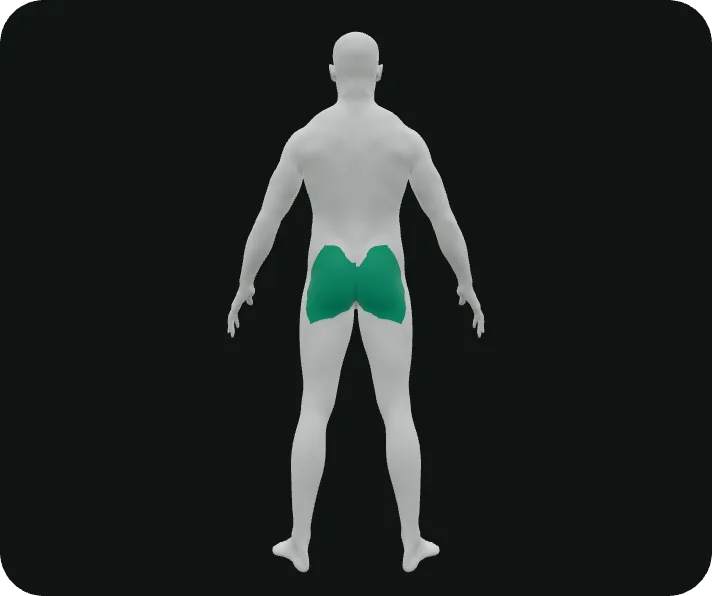
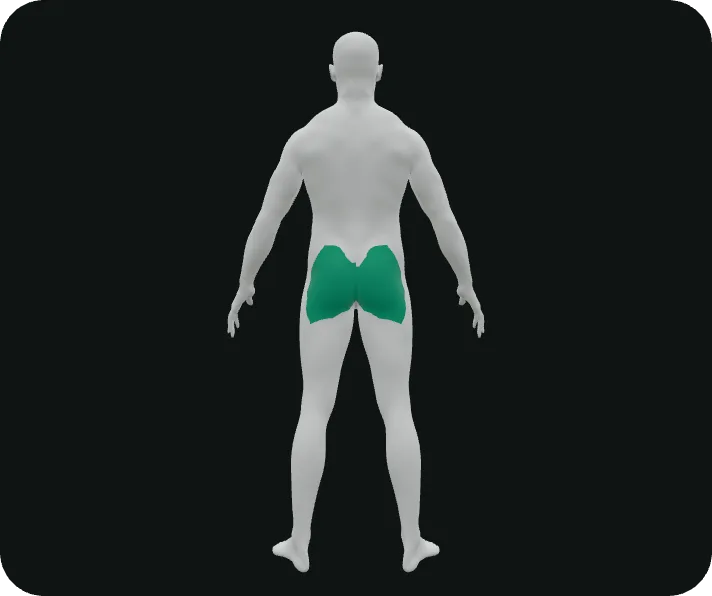
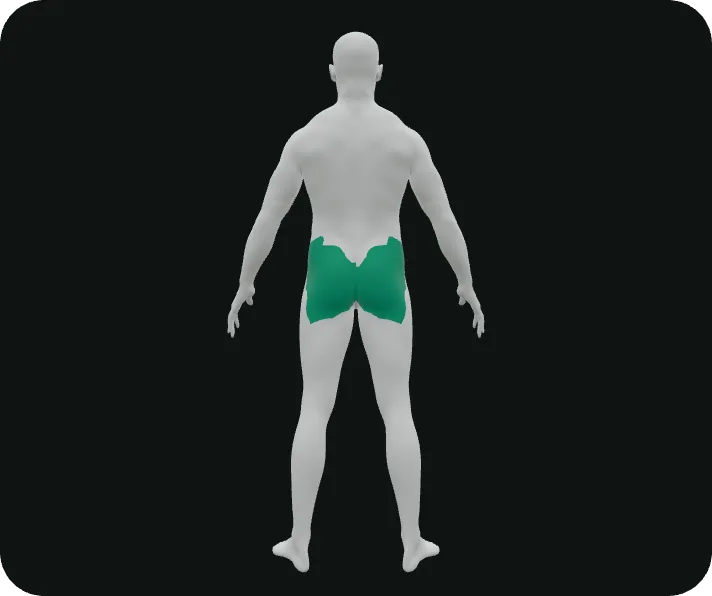
Muscles worked
Filled: primary. Outlined: secondary.
How much
Isometric holds (e.g. 30-45 s) or 2-3 sets of 10-15 slides.
Start: Standing with the back against a wall
Steps
- Stand with the back against a wall and feet about 30-40 cm in front.
- Slide down until the knees are bent to a comfortable angle (up to about 60°).
- Hold, or slide up and down. Progress to a single leg.
Cues
- Knees over the second toe
- Weight through the heels
Common mistakes
- Knees drifting inward
- Going deeper than symptoms allow
Used for
- Patellofemoral pain
- Patellar tendinopathy (isometric loading)
- Knee osteoarthritis
Evidence (2)
Easier
Harder
References (2)
- Ayotte NW, Stetts DM, Keenan G, Greenway EH. J Orthop Sports Phys Ther. 2007;37(2):48-55. Electromyographical analysis of selected lower extremity muscles during 5 unilateral weight-bearing exercises
- Powers CM, Ho KY, Chen YJ, Souza RB, Farrokhi S. J Orthop Sports Phys Ther. 2014;44(5):320-327. Patellofemoral joint stress during weight-bearing and non-weight-bearing quadriceps exercises